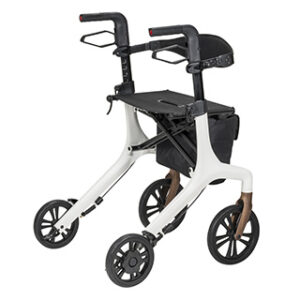
WalkWise on a rollator
Drive Medical is bringing intelligent technology to mobility aids.
The manufacturer has launched its Unbound IQ by Drive brand, a collection of “connected, digital health and tech-enabled solutions,” the company said in a July 29 announcement.
Noting that the introduction coincides with “a pivotal moment in how care is delivered and measured,” Drive Medical said the Unbound IQ product line “helps providers support patients with clinically informed technology and data-drive insights that support earlier, more proactive care decisions.”
“The best care intervention is the one that happens before a crisis,” said Sidney Collin, clinical VP of Technology Innovation. “Both families and the healthcare system are demanding tools that don’t just respond to a catastrophic event — they help prevent it. Whether that means tracking daily movement to catch a functional decline before it leads to a fall, or helping to move with more confidence and independence, Unbound IQ gives providers the tools to intervene earlier, demonstrate measurable impact, and deliver care that truly improves lives.”
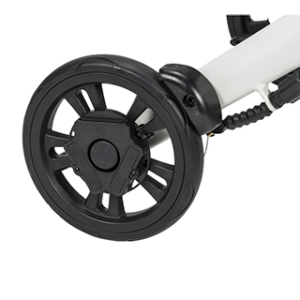
Closeup of WalkWise
Improving gait, safety while walking
The series’ first two products are WalkWise and NexStride.
WalkWise, with smart capabilities, attaches to the consumer’s mobility aid, “transforming it into a connected monitoring solution that supports preventative care at home.” The system delivers real-time activity insights to caregivers via a smartphone app, “enabling earlier intervention and more informed clinical decisions before a crisis occurs.”
“Changes in activity level are among the earliest indicators of functional decline, fall risk and emerging health issues — yet these changes have historically gone undetected between clinical visits,” Drive Medical noted. “WalkWise closes that gap.”
NexStride uses visual and auditory cueing “to help users walk with greater stability and confidence.” The technology addresses the “freezing of gait” syndrome that can cause patients with Parkinson’s disease or multiple sclerosis to become “stuck” and temporarily unable to continue walking.
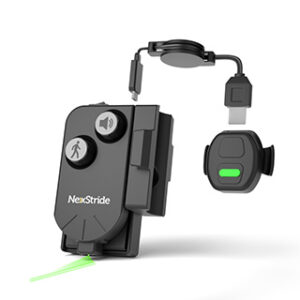
NexStride
“For individuals experiencing mobility challenges, maintaining consistent gait and walking confidence in everyday settings can be difficult,” Drive Medical said. “NexStride supports more stable, confident movement through on-demand visual and auditory cues — wherever users are, not just in clinical settings.”
The manufacturer pointed out that the Centers for Medicare & Medicaid Services as well as other healthcare funding sources “continue to shift toward proactive, data-informed care models,” and added that providers “are increasingly expected to demonstrate outcomes and visibility beyond traditional equipment use. At the same time, more care is moving into the home and across distributed settings, creating new demands for tools that support care outside of traditional clinical environments.”